A Question Worth Taking Seriously
“Are tarot cards bad?” is one of the most common questions people ask before starting a practice — and they ask it sincerely. Religious upbringing, family beliefs, internet warnings, or simple uncertainty about the unknown all feed the question.
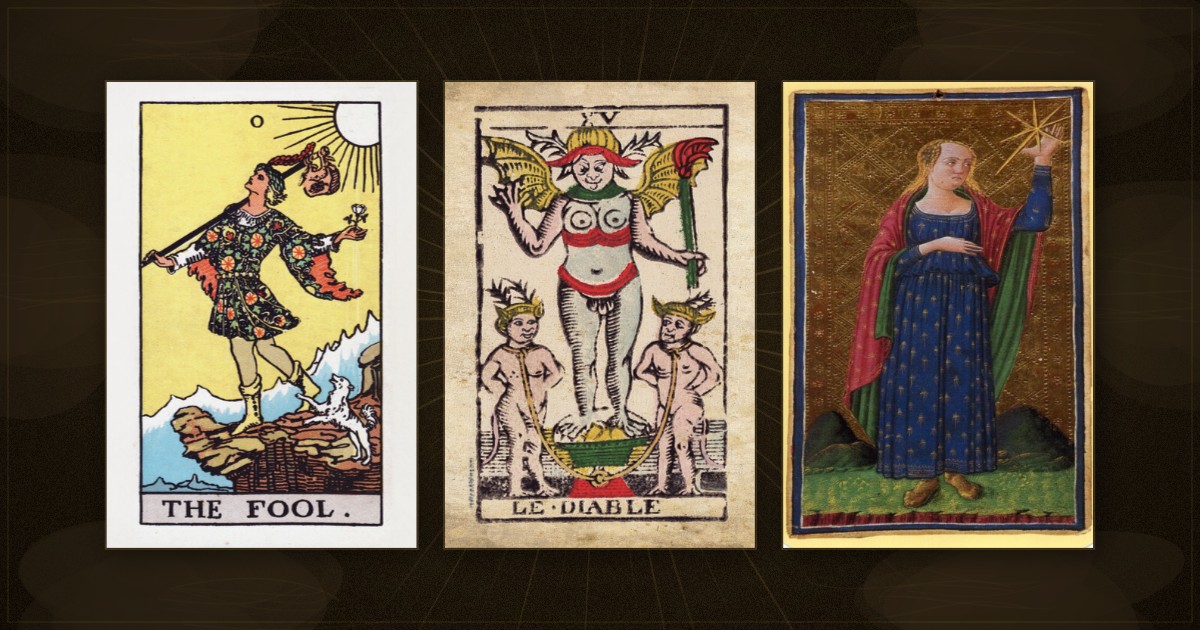
Here’s a straightforward answer: tarot cards are not inherently bad. They are a deck of 78 illustrated cards used as a tool for reflection. What you do with them, and what meaning you assign them, determines whether they help or harm.
This piece walks through the most common concerns honestly, without dismissing them.
- Tarot cards are not inherently evil, sinful, or dangerous — they are a 78-card deck used for reflection and self-exploration.
- Christian, Jewish, and Muslim teachings vary on tarot; some traditions view divination as forbidden, while many people of faith use cards strictly as a self-reflection tool without conflict.
- Tarot does not summon spirits, demons, or supernatural entities in any verifiable sense; the cards work primarily as a psychological mirror.
- The main risks are psychological: over-reliance, anxiety from negative readings, or using tarot to avoid taking action — not spiritual harm.
- Tarot is safest when used as a self-reflection tool rather than as fortune-telling or a substitute for professional advice.
What Tarot Cards Actually Are
Before answering “is it bad,” it helps to know what tarot is. The tarot deck is:
- 78 illustrated cards (22 Major Arcana, 56 Minor Arcana)
- Originally a card game played in 15th-century Italy (yes — a game)
- Adapted for divination and self-reflection starting in the 18th century
- Today used primarily as a psychological and spiritual tool
The cards themselves are paper and ink. They have no inherent power. The meaning comes from the symbols, the interpretive tradition, and the user’s reflection.
Are Tarot Cards Evil?
This is usually the first concern, and it deserves a direct answer.
No, tarot cards are not evil. They don’t summon evil spirits, channel demons, or open spiritual gateways in any verifiable sense. Most experienced tarot readers — including many who are deeply spiritual — describe tarot as a mirror, not a portal.
When you draw a card, three things happen:
- Random selection produces an image
- Your mind responds to the image
- The response surfaces something you already knew or felt
That’s it. The “magic” of tarot, to the extent it has any, is the magic of structured self-reflection. The cards interrupt your usual thought patterns and force you to consider perspectives you might have missed.
Are Tarot Cards a Sin in Christianity?
This is more nuanced. Different Christian traditions take different positions:
Some Christians consider tarot prohibited. Bible passages such as Deuteronomy 18:10-12, which forbid divination, witchcraft, and consulting mediums, are interpreted by some traditions to include tarot.
Other Christians use tarot without conflict. Many believers approach the cards as a psychological tool or art form, similar to journaling prompts or meditation cards. They draw a clear line between divination (claiming to predict the future) and reflection (using the cards to think more clearly about a situation).
Some Christian traditions have created their own card decks explicitly designed for prayer and reflection — drawing on the same symbolic-reflection mechanism without using traditional tarot imagery.
Whether tarot is “a sin” for you depends on your specific tradition’s interpretation and your own conscience. If you have concerns, it’s worth speaking with a trusted spiritual leader who knows your faith deeply rather than relying on internet hot takes.
Tarot in Other Religious Traditions
Judaism: Most observant traditions discourage divination based on Torah prohibitions, though some Jewish mystics have engaged with cards as a reflection tool, particularly within Kabbalistic frameworks.
Islam: Most Islamic scholars consider divination (including tarot used for fortune-telling) prohibited. As with Christianity, some Muslims separate divinatory use from reflective use.
Buddhism: Tarot doesn’t directly conflict with most Buddhist teachings. Some practitioners use it alongside meditation as a form of self-inquiry.
Hinduism: Various Hindu traditions have their own card-based reflection systems and tarot is generally not considered problematic.
Spiritual but not religious: Tarot is most commonly used by people who consider themselves spiritual but not aligned with a specific organized religion. This reflects tarot’s flexibility as a tool rather than a doctrine.
What Are the Real Risks of Tarot?
The actual risks of tarot are psychological, not spiritual:
Over-Reliance
Some people start consulting the cards for every decision, large or small. This builds dependence on an external system instead of trusting your own judgment. Healthy tarot practice supplements decision-making; it doesn’t replace it.
Anxiety from Difficult Cards
Drawing The Tower, Death, or other “scary” cards can create real anxiety, especially for newcomers who don’t yet understand the symbolic meaning. Beginners sometimes spiral into worry about a card that simply represents transformation or change.
Avoidance of Action
“The cards say wait” can become an excuse to avoid hard decisions. If you’re using tarot to delay action you know you need to take, it’s hurting you.
Replacing Professional Help
Tarot is not therapy, medical advice, legal counsel, or financial planning. Using it as a substitute for professional help when you need it is a real risk. Tarot can complement those resources but should never replace them.
Self-Fulfilling Prophecy
If you draw a difficult card and then unconsciously act in ways that produce that outcome, you create the very situation you feared. The cards didn’t predict it; you enacted it.
When Tarot Is Most Likely to Be Helpful
Tarot is most useful when:
- Used as a reflection tool, not a fortune-telling system
- Approached with curiosity rather than fear
- Combined with journaling or other reflective practice
- Held loosely — informing your thinking, not dictating your choices
- Practiced daily in small doses rather than consulted in crisis
When Tarot Might Not Be Right for You
Tarot may not be a good fit if:
- Your faith tradition explicitly forbids it and your conscience is uneasy
- You’re prone to anxiety and would obsess over difficult cards
- You’re in active crisis and need professional support, not symbolic reflection
- You’re inclined to use it as a substitute for honest decision-making
- It conflicts with values that are important to you
If any of these apply, journaling, meditation, or therapy may serve the same need without the friction.
What Reasonable Tarot Practice Looks Like
A healthy tarot practice typically includes:
- Brief, consistent daily reflection — usually a single card
- Honest interpretation — sitting with what the card actually shows, not just what you want it to mean
- Integration with action — taking the insight back into your life rather than getting lost in spiritual abstraction
- Boundaries on big decisions — using cards as input, not as the deciding voice
- Connection to other practices — journaling, therapy, meditation, friendship, prayer (if part of your tradition)
This is the kind of practice The Cards Know was designed for — a tool that helps you reflect, not a system that dictates what to do.
Frequently Asked Questions
Are tarot cards demonic? No, tarot cards are not demonic. They are illustrated cards used as a tool for reflection. Some religious traditions view divination practices as spiritually problematic, but the cards themselves have no inherent supernatural power.
Is reading tarot a sin? This depends on your faith tradition. Some interpretations of Christianity, Judaism, and Islam consider divination forbidden. Other traditions and many individual believers use tarot as a non-divinatory reflection tool without conflict.
Can tarot cards harm you? Not spiritually, in any verifiable sense. The real risks are psychological: anxiety from difficult cards, over-reliance on the system, or using tarot to avoid action.
Can tarot cards predict the future? No, not reliably. Tarot can illuminate trajectories — what’s likely to happen if current patterns continue — but it doesn’t predict specific events, dates, or outcomes. Read more on this question.
Should I burn or get rid of my tarot cards? Only if having them genuinely conflicts with your values or causes you anxiety. There’s no spiritual urgency around disposing of them. If you no longer want them, gift them, donate them, or discard them like any other deck of cards.
Are tarot cards safe for beginners? Yes, with reasonable expectations. Don’t read about life-or-death issues for guidance, don’t use cards as a substitute for professional help, and approach them as a reflection tool rather than fortune-telling.
The honest summary: tarot cards are tools. Like any tool, they can be used well or poorly. Used well, they encourage honest self-reflection. Used poorly, they can fuel anxiety or avoidance. The cards themselves are neither good nor bad — only the relationship you build with them is.