No, It Does Not Mean You Are Going to Die
Let us get this out of the way immediately. The Death card in tarot does not predict physical death. It never has. Every experienced tarot reader will tell you the same thing.
The Death card is about endings, transformation, and the necessary closing of one chapter so another can begin. It is one of the most misunderstood cards in the deck and, ironically, one of the most positive when you understand what it actually says.
- The Death card does not predict physical death and never has. Card 13 represents endings, transformation, and the closing of one chapter so another can begin — it is one of the most positive cards once understood.
- Death sits between The Hanged Man and Temperance in the Major Arcana, forming the sequence: surrender, transform, integrate. The card marks an ending that is already in motion rather than a future warning.
- Reversed Death indicates resistance to transformation through clinging, stagnation, or partial change. Refusing to let something die means nothing new can be born, and partial transformation creates the most uncomfortable position of all.
- Death paired with The Star is the most hopeful combination, signaling transformation that leads directly to renewal. Paired with The Empress it indicates creative rebirth, while paired with the Ten of Swords it signals a painful but decisive ending.
- Experienced readers welcome the Death card because it confirms an ending already sensed and grants permission to release. The image's rising sun signals that Death is a transition, not a termination.
What the Image Shows
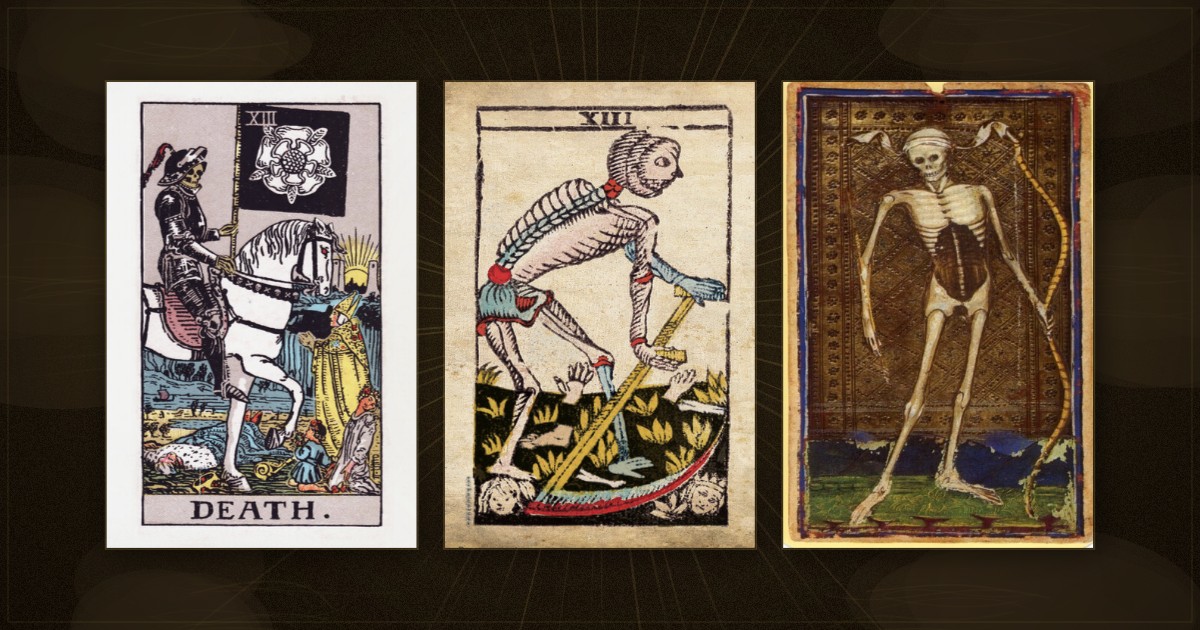
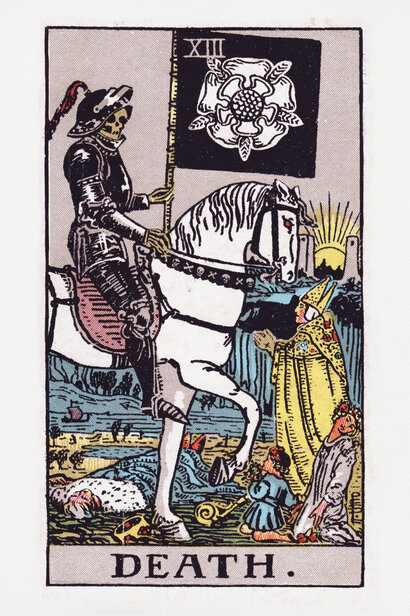
In the Rider-Waite deck, Death rides a white horse in black armor. A king lies fallen. A bishop prays. A child offers flowers. In the background, the sun rises between two towers.
Every detail matters:
- The skeleton: What remains after everything impermanent is stripped away. The essential truth underneath.
- The white horse: Purity of purpose. This transformation is not malicious.
- The black armor: Invincibility. You cannot fight this change. It is coming regardless.
- The fallen king: Power and status cannot stop transformation. No one is exempt.
- The child with flowers: Innocence accepts change naturally. It is resistance that creates suffering.
- The rising sun: This is not an ending. It is a transition. Something new is being born.
Death Upright: Core Meanings
Death is card 13 in the Major Arcana, sitting between The Hanged Man (surrender and perspective shift) and Temperance (balance and integration). The sequence: let go, transform, find balance.
What the Death card means:
- An ending that is already happening. Not a future warning. The change is underway. Something in your life is completing its cycle.
- Transformation. The caterpillar-to-butterfly metaphor is overused but accurate. What emerges will be fundamentally different from what existed before.
- Release. Holding on to what is dying extends the pain. The Death card asks you to let go.
- Clearing space. Nothing new can enter a life that is already full of what has expired. Death creates room.
Death in Love Readings
In a relationship: A phase of the relationship is ending. This could mean the relationship itself is over, but more often it means the dynamic is transforming. The honeymoon phase dying. The codependent pattern breaking. The roles shifting. What matters is whether both people can accept the new form.
Single: An old pattern in how you approach love is dying. The type you always chase, the wall you always build, the story you always tell yourself. Something is changing at a fundamental level. Let it.
Death in Career Readings
- A job, role, or career path is ending
- An old professional identity is dissolving
- A project reaching its natural completion
- A work relationship or dynamic transforming
- Time to stop doing what is no longer working
The Death card in career readings often precedes the best professional moves people make. Leaving the stable but soul-crushing job. Shutting down the business that stopped working. Letting go of the title that defined you.
Death Reversed
When Death appears reversed, the transformation is being resisted:
- Clinging to what is over. You know it is done but you cannot let go. The relationship, the job, the identity, the habit.
- Stagnation. Refusing to let something die means nothing new can be born. Life feels stuck because you are holding on.
- Delayed transformation. The change will happen eventually. Reversed Death just means it will take longer and hurt more.
- Partial change. You have started the transformation but stopped halfway. One foot in the old life, one in the new. This is the most uncomfortable position.
Why Experienced Readers Welcome Death
Beginners dread the Death card. Experienced readers often welcome it. Here is why:
It confirms what you already know. When Death appears, it usually names an ending you have been sensing but not acknowledging. There is relief in confirmation.
It gives permission. Sometimes you need an external signal that it is okay to let go. The Death card is that signal.
It promises renewal. In the Major Arcana sequence, Death is followed by Temperance (healing and balance), then The Devil, then The Tower, then The Star (hope and renewal). The journey after Death is not easy, but it leads somewhere meaningful.
It means you are growing. Stagnation is the absence of Death energy. If nothing in your life is ending, nothing is beginning either.
Cards That Shift Death’s Meaning
Death + The Star: The most hopeful combination. Transformation leads directly to healing and renewal. Whatever you are losing will be replaced by something that nourishes you.
Death + Ten of Swords: A painful, decisive ending. Rock bottom. But tens are completion. And the Ten of Swords always shows a sunrise in the background.
Death + Ace of any suit: An ending that immediately births a beginning. The door closes and another opens in the same moment.
Death + Four of Cups: Apathy about the transformation. You know something needs to change but you cannot find the energy or motivation to engage with it.
Death + The Empress: Creative rebirth. Something fertile and alive is growing from what died.
How to Sit with the Death Card
When Death appears in your reading:
- Name what is ending. Be specific. Not “something is changing.” What exactly is completing its cycle?
- Notice your resistance. Where are you holding on? What are you afraid to lose?
- Look for the new growth. What has space to emerge once you let go?
- Be patient. Transformation is not instant. The Death card marks the beginning of a process, not its completion.
A daily tarot practice with The Cards Know helps you develop a healthy relationship with endings. When you sit with the cards every day, you learn that difficult cards are not punishments. They are invitations to grow.