Better Questions, Better Readings
The single biggest factor in a tarot reading isn’t the spread you use or which card you draw. It’s the question you bring to the deck.
A vague question gets a vague answer. A clear, open-ended question gets insight you can actually use. Here’s how to frame questions that make your readings more powerful.
- Tarot question quality determines reading quality more than the spread or cards drawn. Vague questions yield vague answers, while clear, open-ended questions produce actionable insight.
- Four question types should be avoided: yes/no, third-party feelings, "when" questions, and questions containing their own answer. Yes/no forces binary answers from a nuanced system, third-party questions ask the cards to read minds, "when" questions assume tarot operates on a timeline, and self-answering questions reveal the real issue is elsewhere.
- Effective tarot questions are open-ended, focused on the asker, and invite insight rather than prediction. Reframing "Will I get the job?" as "What do I need to know about this opportunity?" turns a forecast into reflection.
- Five power frameworks work for almost any situation. "What do I need to know about ___?", "What is the energy surrounding ___?", "What am I not seeing about ___?", "How can I best navigate ___?", and "What is the lesson in ___?" each shift the reading toward agency and insight.
- The same question should not be re-asked in one sitting, but can be re-asked over time. Pulling again immediately won't change a difficult answer, while asking the same question a week later often produces different cards because the situation and energy have shifted.
Questions to Avoid
Yes/No questions. “Will I get the promotion?” forces a binary answer from a system designed for nuance. You’ll get a card and then have to squeeze it into yes or no, losing most of the meaning.
Questions about other people’s feelings. “Does she love me?” asks the cards to read someone else’s mind. Tarot reflects your energy and your situation. It can’t tell you what’s in someone else’s heart.
“When” questions. “When will I find love?” assumes tarot operates on a timeline. It doesn’t. Tarot shows energy, patterns, and potential. Timing is not its strength.
Questions that already contain your answer. “Should I stay at my terrible job?” reveals that you already know it’s terrible. The question isn’t whether to stay. The real question is what’s keeping you there.
Questions That Work
The best tarot questions share three qualities: they’re open-ended, they’re focused on you, and they invite insight rather than prediction.
Instead of: “Will I get the job?” Try: “What do I need to know about this opportunity?”
Instead of: “Does he like me?” Try: “What energy am I bringing to this connection?”
Instead of: “When will things get better?” Try: “What’s blocking me from moving forward?”
Instead of: “Should I move to a new city?” Try: “What would a fresh start offer me right now?”
Power Frameworks for Questions
These templates work for almost any situation:
“What do I need to know about ___?” The most versatile tarot question. It keeps things open and lets the cards lead. Use it when you’re not sure what to ask.
“What is the energy surrounding ___?” Good for understanding the vibe of a situation without forcing a narrative. Useful for new relationships, job offers, or life transitions.
“What am I not seeing about ___?” Asks the cards to reveal your blind spot. This is where tarot is most powerful because it surfaces what your conscious mind is filtering out.
“How can I best navigate ___?” Action-oriented. Instead of asking what will happen, you’re asking for guidance on how to respond. This keeps your agency in the reading.
“What is the lesson in ___?” When you’re going through something difficult and want to find meaning rather than an escape.

Setting Your Intention
Before you shuffle, take a moment to hold your question clearly in mind. You don’t need to say it out loud. You don’t need to write it down (though journaling it can help). Just let it settle.
If your mind is scattered, your reading will be scattered. Even 30 seconds of focused intention before drawing makes a noticeable difference.
Some readers say their question silently while shuffling. Others hold the question once and then let go, trusting the cards to pick it up. Both work. Find what feels natural.
When You Don’t Have a Question
Sometimes you don’t have a specific question. That’s fine. “What do I need to know today?” or “What energy should I be aware of?” are perfectly valid. A daily pull doesn’t need a life crisis to be useful. Often the most revealing readings come from the most casual questions.
Re-asking Questions
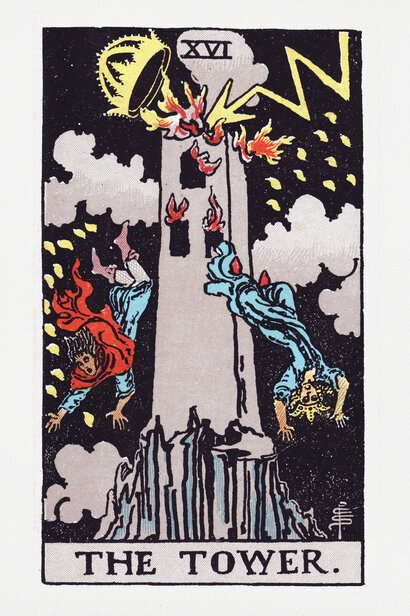
Don’t re-ask the same question in the same sitting. If you pull The Tower and don’t like it, pulling again won’t change the answer. It just means you’re not ready to hear it. Sit with it. Journal about it. Come back tomorrow if you need more clarity.
Do re-ask over time. The same question asked a week apart will often get different cards because you’ve changed, the situation has evolved, and the energy has shifted. This is one of the most valuable aspects of a daily practice: watching how the cards’ answers change as your life changes.

The Question Behind the Question
Here’s the secret experienced readers know: the question you ask is rarely the real question. You say “What should I do about my job?” but the real question is “Am I allowed to want more?” You say “Will this relationship work?” but the real question is “Am I worthy of love?”
Pay attention to what comes up emotionally when you see your card. That feeling is pointing to the real question. Follow it.