Five Minutes That Change Your Day
Most mornings start on autopilot. Alarm, phone, scroll, rush. By the time you are out the door, the day is already happening to you rather than through you.
A morning tarot ritual interrupts this pattern. It takes five minutes. It costs nothing. And it creates something that scrolling never will: a moment of intentional connection with yourself before the world floods in.
- The morning tarot ritual takes five minutes across five steps: settle, set intention, draw one card, sit with it, and carry it through the day. Complexity kills habits, so the ritual is intentionally minimal to be sustainable.
- Morning readings work best because the mind is quieter and less defended before emails and obligations stack up. Yes/no questions are discouraged in mornings — the goal is a lens for the day, not a verdict.
- The practice operates through three psychological mechanisms: priming, anchoring, and accumulation. Priming influences attention to later events, anchoring creates a decision-making touchstone, and accumulation builds a dataset of inner patterns over time.
- Common morning cards have specific daily meanings: The Sun signals enjoyment, The Hermit signals needed solitude, the Two of Swords flags a decision to face. The Eight of Cups indicates something to leave behind, while the Page of Wands invites curiosity.
- The practice progresses through predictable stages over six months. Week 1 brings novelty, weeks 2-3 bring adjustment, month 1 brings pattern recognition, month 3 makes the ritual automatic, and month 6+ produces intuitive fluency.
Why Morning Works Best
Tarot works best when your mind is relatively quiet. In the morning, before emails and obligations stack up, you are closer to your intuition than you will be for the rest of the day.
The morning mind has not yet built its defenses. It is more honest, more receptive, more willing to sit with what a card shows rather than arguing with it.
This does not mean evening readings are worthless. But morning readings have a unique advantage: they set a tone. Whatever card you draw becomes a lens for the day ahead. You carry it with you, consciously or not, and it shapes how you notice and interpret what happens.
The Ritual: Keep It Simple
Complexity kills habits. Here is a morning tarot ritual that you will actually sustain:
Step 1: Settle (30 seconds)
Sit down. Take three slow breaths. You do not need to meditate. You just need to arrive in the present moment. Feel your feet on the floor. Notice your breath.
Step 2: Set an Intention (30 seconds)
You can ask a question or set an open intention. Both work.
Questions that work well for mornings:
- What do I need to know about today?
- What energy should I carry into this day?
- What should I pay attention to?
Open intention: “Show me what I need to see.” No question, just openness.
Do not ask yes-or-no questions in the morning. You want a lens, not a verdict.
Step 3: Draw One Card (10 seconds)
One card. Not three, not five. One. The daily draw is about focus, and a single card gives you exactly the right amount.
Look at the image before you recall any memorized meanings. What do you see? What stands out? What do you feel?
Step 4: Sit with It (2 minutes)
This is where the work happens. Read the card. Consider how it relates to your day ahead. What does it suggest? What does it warn? What does it invite?
Some mornings the connection is immediate. You draw The Chariot and you know you have a difficult conversation ahead that requires willpower. Other mornings the card feels random. That is fine. Let it sit. By evening, it usually makes sense.
Step 5: Carry It (all day)
Take a mental snapshot of your card. Or write it in a journal in one sentence: “Today’s card: Seven of Cups. Theme: too many options, need to choose.”
Throughout the day, notice when the card’s energy shows up. This is not magical thinking. It is attention training. The card gives your awareness a specific frequency to tune into.
What Makes This Practice Powerful
The morning card pull works through three mechanisms:
Priming. Psychologists call it priming: exposure to one stimulus influences your response to later stimuli. Drawing The Hermit in the morning primes you to notice moments of solitude, reflection, and withdrawal throughout the day.
Anchoring. The card becomes an anchor point. When the day gets chaotic, you have something to return to. “What would the Queen of Cups do right now?” This is not superstition. It is using an archetype as a decision-making framework.
Accumulation. One morning reading is interesting. Thirty in a row is a dataset. After a month of daily draws, you have a map of your inner landscape. Patterns emerge that you could never see from a single reading.
Common Morning Cards and What They Suggest
Some cards appear frequently in morning pulls. Here is what they often mean in a daily context:
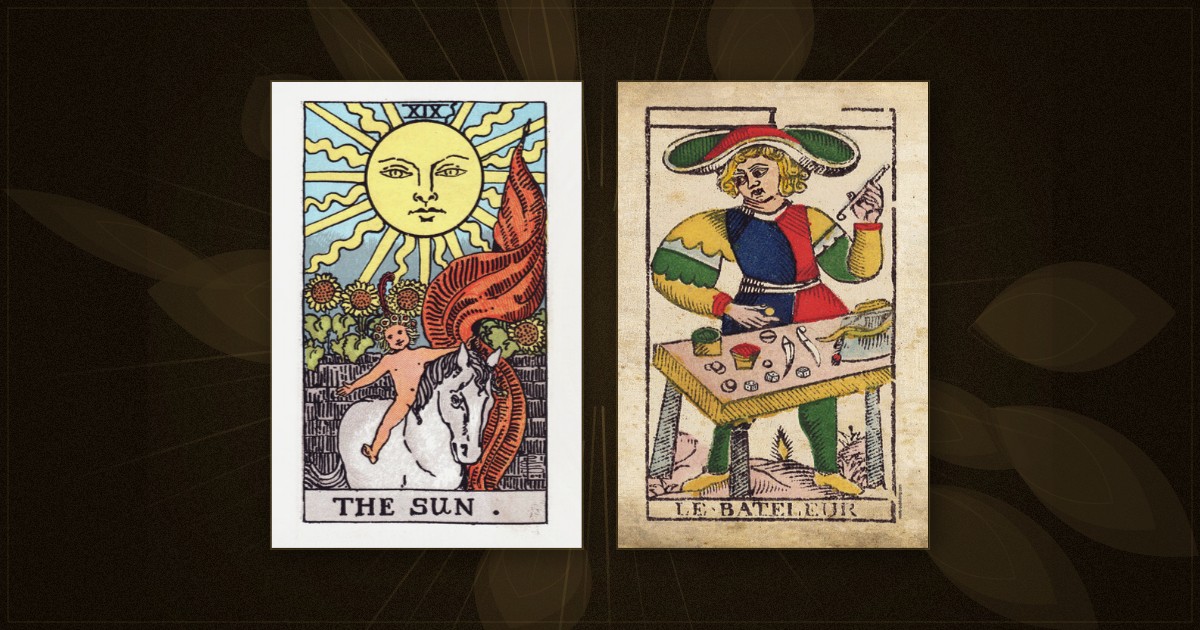
The Sun: A good day ahead. Enjoy it without overthinking. Share your energy with others.
The Hermit: You need quiet today. Protect your solitude. Say no to what drains you.
Two of Swords: A decision is waiting. Today is the day to face it instead of avoiding it.
Three of Pentacles: Collaboration will matter today. Show up as a team player. Your individual contribution is part of something larger.
Eight of Cups: Something needs to be left behind. Today is for walking away from what no longer serves you, even if it is just an attitude.
Page of Wands: Be curious. Approach the day with beginner energy. Something wants to spark.
Building the Habit
The biggest obstacle is not the five minutes. It is remembering to do it.
Attach it to an existing habit. Draw your card right after making coffee, right after brushing your teeth, or right before opening your phone. Pair the new habit with an established one.
Same place, same time. Sit in the same chair. Use the same table. The physical consistency helps your brain shift into ritual mode.
Lower the bar. On days when five minutes feels like too much, do two minutes. Draw the card, look at it, name one word that comes to mind. Done. A tiny practice kept is better than an ambitious one abandoned.
Use an app. The Cards Know delivers a daily reading that is already personalized to you. It removes the friction of shuffling and second-guessing, giving you a card and an interpretation that you can sit with in minutes. Some mornings, letting the app handle the draw is the difference between doing the practice and skipping it.
What to Expect Over Time
Week 1: Novelty. Each card feels significant. You might overinterpret.
Weeks 2-3: Adjustment. Some mornings the card feels flat. You might wonder if this is working. Keep going.
Month 1: Pattern recognition begins. You notice the same suits or numbers recurring. Themes emerge.
Month 3: The practice becomes automatic. You feel off on mornings you skip it. The cards start to function as a genuine compass.
Month 6+: Fluency. You read cards intuitively rather than from memorized meanings. The morning draw is no longer something you do. It is part of who you are.
The goal is not to become a tarot expert. The goal is to start each day with five minutes of honest self-reflection. The cards are just the tool that makes that reflection structured, surprising, and sustainable.