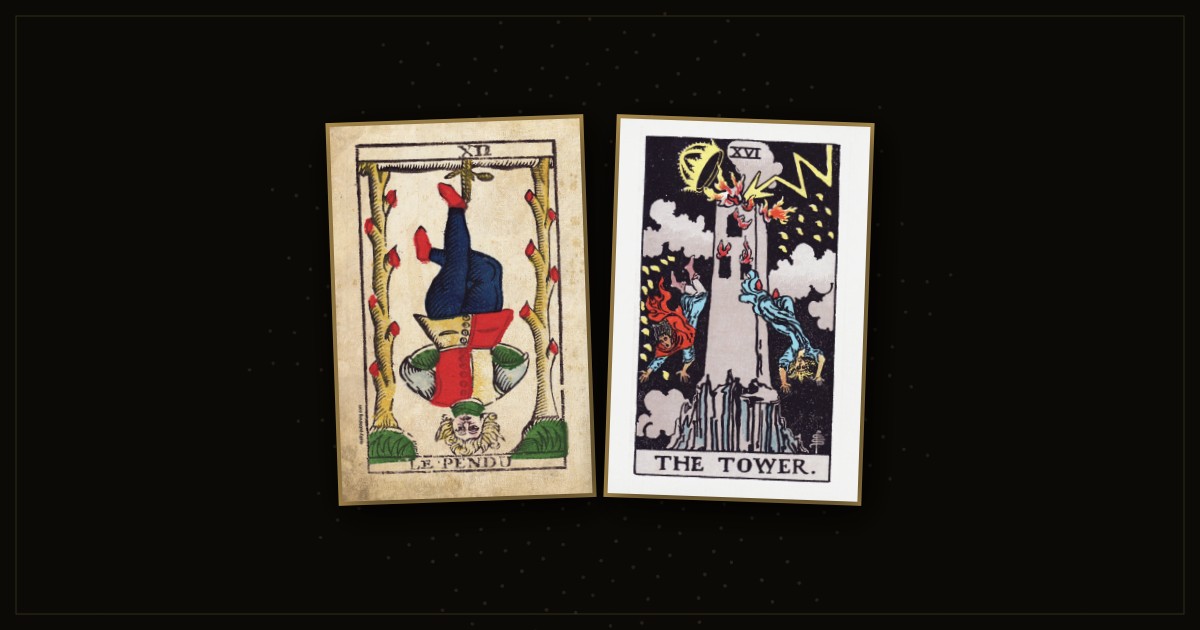
The Great Reversal Debate
Nothing divides tarot readers faster than reversed cards. Some readers won’t touch a deck without them. Others have read for decades and never use them. Both approaches are valid.
A reversed card is simply one that appears upside-down when you draw it. The question is: does that change the meaning?
- A reversed tarot card is one that appears upside-down when drawn. Whether reversal changes meaning depends on the reader's chosen approach, and skilled readers fall on both sides of the debate.
- Three schools of thought govern reversed cards. Reversals can be read as meaningful (blocked, internalized, shadow side, or lessened), as the simple negative of the upright meaning, or as nonexistent with all cards kept upright.
- A four-step method handles reversed cards in practice. Read the upright meaning first, ask whether the energy is blocked or in shadow form, consider the spread position, and then check surrounding cards for amplification or diminishment.
- Specific reversed meanings flip several major cards significantly. The Tower reversed can mean a dodged disruption, Death reversed signals resisted transformation, The Star reversed indicates lost hope, and the Ten of Swords reversed is one of the deck's most hopeful reversals signaling that the worst is over.
- Beginners are advised to start without reversals. Learning all 78 cards upright first builds the foundation, with reversals introduced later for nuance once the upright meanings are intuitive.
Three Schools of Thought
1. Reversals Are Meaningful
The most common approach. When a card appears reversed, its energy is modified:
- Blocked or delayed. The card’s energy is present but can’t fully express itself. The Sun reversed might mean joy is coming but something is in the way.
- Internalized. The energy is turned inward. The Emperor reversed might mean you’re developing inner authority rather than expressing it externally.
- The shadow side. The card’s challenging aspects are emphasized. The Magician reversed might point to manipulation rather than manifestation.
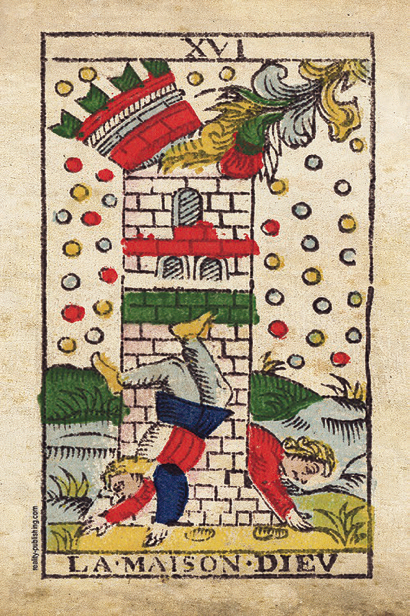
- Lessened intensity. The card’s meaning is present but muted. The Tower reversed might be a smaller disruption rather than a full collapse.
2. Reversals Add the Negative
A simpler approach. Upright is the positive expression of the card. Reversed is the negative. Strength upright is courage. Reversed is self-doubt. The Empress upright is abundance. Reversed is scarcity.
This method is easier for beginners because it creates a clear binary. But it can oversimplify cards that already contain both light and shadow.
3. No Reversals
Some readers keep all cards upright and read the full spectrum of each card’s meaning based on context, surrounding cards, and intuition. The argument: every card already contains its own shadow. The Devil doesn’t need to be reversed to talk about bondage and limitation. That’s what it means upright.
How to Read Reversed Cards
If you do use reversals, here’s a practical approach:
Step 1: Read the upright meaning first. Know what the card means in its full expression.
Step 2: Ask “What if this energy is blocked, turned inward, or in its shadow form?” That question usually gives you the reversed meaning intuitively.
Step 3: Consider the position in the spread. A reversed card in the “challenge” position is different from one in the “outcome” position. Context matters more than a fixed reversed definition.
Step 4: Look at surrounding cards. A reversed card next to strongly positive cards might just be slightly diminished. A reversed card surrounded by other difficult cards amplifies the challenge.
Common Reversed Meanings
Here are a few cards where the reversal significantly shifts the reading:
The Tower reversed — avoiding a necessary change, or a disruption that happens internally rather than externally. Sometimes it means you dodged a bullet.
Death reversed — resisting transformation. Holding on to something that needs to end. The change is happening whether you cooperate or not.
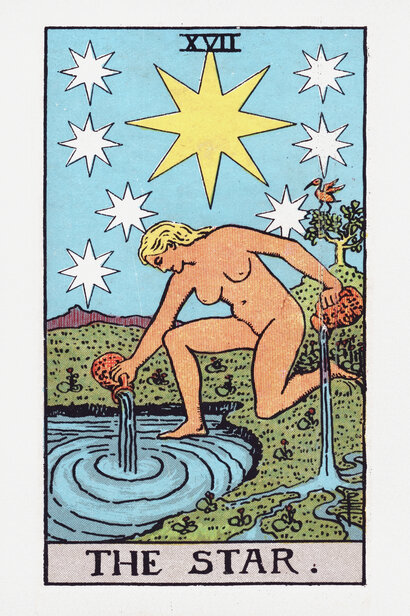
The Star reversed — loss of hope, disconnection from faith. The light is still there but you can’t see it right now.
The Lovers reversed — misalignment, a choice being avoided, values in conflict.
The Fool reversed — recklessness rather than innocence. Taking a leap without looking, or being afraid to leap at all.
Ace of Cups reversed — emotional block. Love or compassion is being offered but you can’t receive it.
Ten of Swords reversed — the worst is actually over. Recovery is beginning even if it doesn’t feel like it yet. This is one of the most hopeful reversals in the deck.
Should Beginners Use Reversals?
My honest recommendation: start without them. Learn the 78 cards upright first. Get comfortable with the suits, the numbers, the Major Arcana. That’s already a lot of information.
Once you know the cards well enough that you can look at any card and immediately think “this could mean X or Y,” you’re ready for reversals. They’ll add nuance rather than confusion.
If you try reversals and they make your readings feel muddy or overly negative, drop them. Come back to them later or not at all. Your practice is yours.
How to Get Reversals in Your Deck
If you decide to use them, you need to introduce them during shuffling:
- Cut the deck in half and rotate one half 180 degrees before shuffling
- During an overhand shuffle, occasionally flip a section of cards
- Use the messy pile method — it naturally creates reversals
If you don’t use reversals, simply keep all cards facing the same direction. If one accidentally flips during shuffling, turn it back.
The Bottom Line
Reversals are a tool, not a rule. They add a layer of nuance to readings, but they’re not required. The best reading is the one that’s clear and useful, whether that includes reversals or not.
Try it both ways. See which approach gives you readings that resonate. That’s your answer.