What Is Shadow Work?
The shadow is a concept from Jungian psychology. It is the collection of traits, desires, emotions, and memories that you have pushed out of conscious awareness. Not because they are bad, but because at some point you decided they were unacceptable.
Maybe you learned that anger was wrong, so you buried it. Maybe vulnerability felt dangerous, so you armored up. Maybe ambition was labeled selfish, so you made yourself small.
These buried parts do not disappear. They leak out sideways: as overreactions, projection, self-sabotage, repeating patterns. Shadow work is the practice of bringing these hidden parts into the light so they lose their power over you.
Tarot is one of the best tools for this work.
- Shadow work is a Jungian practice of bringing repressed traits, desires, and emotions into conscious awareness. Buried parts do not disappear — they leak out as overreactions, projection, self-sabotage, and repeating patterns.
- The cards that trigger discomfort or instinctive dislike are the most valuable for shadow work. Strong negative reactions point directly at shadow material the conscious mind has been avoiding.
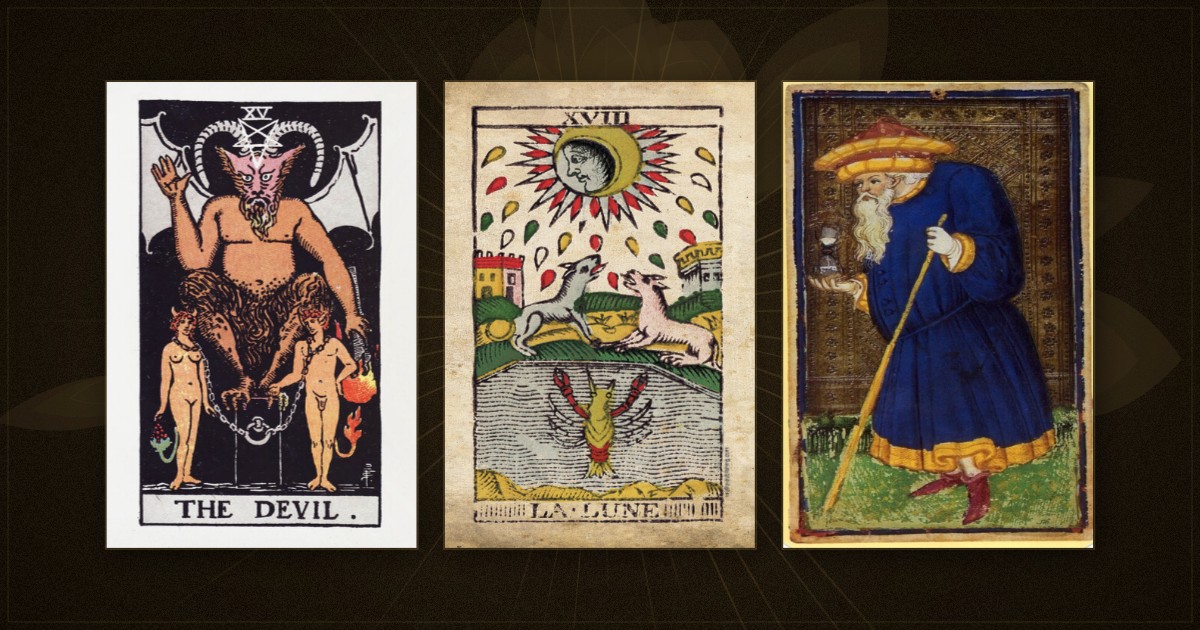
- Five Major Arcana cards frequently surface shadow material: The Devil, The Moon, The Tower, Death, and The Hermit. The Devil reveals self-imposed bondage, The Moon represents the unconscious landscape, and The Hermit carries the lantern needed to walk into inner darkness.
- The five-card shadow work spread covers Persona, Shadow, Trigger, Origin, and Integration. The spread is designed to surface buried material gently while showing where the pattern began and how to reclaim it.
- Integrating the shadow stops projection, frees energy spent on repression, and improves relationships. The goal is not acting on every repressed impulse but acknowledging that those impulses exist and understanding why.
Why Tarot Works for Shadow Work
Shadow material is, by definition, hard to see. You built defenses against it. Your conscious mind does not want to look at it.
Tarot bypasses those defenses. When you draw a card, you are responding to an external image rather than trying to introspect directly. The card becomes a mirror that shows you what you could not (or would not) see on your own.
The cards that make you uncomfortable are the most valuable. The ones you instinctively dislike, the ones that trigger a strong reaction, the ones you wish you had not drawn. Those are your shadow cards.
Shadow Cards in the Major Arcana
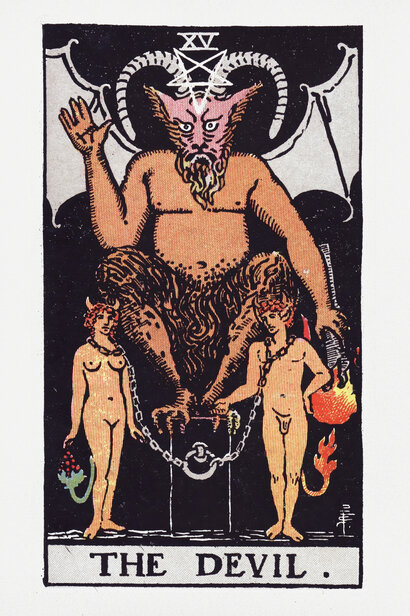
Certain Major Arcana cards frequently point to shadow material:
The Devil — The most obvious shadow card. Represents bondage to patterns you cannot see: addiction, codependency, materialism, power games. The Devil does not trap you. It shows you that you have been trapping yourself.
The Moon — Illusion, confusion, and the unconscious mind. The Moon is the landscape of the shadow itself: murky, shifting, populated by fears that look different in daylight.
The Tower — What happens when shadow material can no longer be contained. Sudden collapse. The truth you were avoiding becomes undeniable.
Death — Transformation that requires letting something die. Often the shadow attachment is to an identity that no longer serves you but feels too scary to release.
The Hermit — Willingness to go inward alone. Shadow work is solitary work. The Hermit carries a lantern into the darkness, which is exactly what this practice requires.
A Shadow Work Tarot Spread
This five-card spread is designed to surface shadow material gently but honestly.
Card 1: My Persona — The face I show the world. The version of myself I am comfortable with.
Card 2: My Shadow — What I have buried, denied, or projected onto others. The trait I refuse to own.
Card 3: The Trigger — Where this shadow shows up in my daily life. The situations that bring it to the surface.
Card 4: The Origin — Where this pattern began. The moment or message that taught me to hide this part of myself.
Card 5: The Integration — How to reclaim this shadow trait. What happens when I stop fighting it and start working with it.
Read these cards slowly. Sit with discomfort. The point is not to fix anything immediately but to see clearly.
How to Practice Shadow Work with Tarot
Start with your least favorite card. Which card in the deck do you dislike the most? Pull it out and sit with it. Ask yourself: what is it about this card that bothers me? The answer often reveals a shadow trait.
Track your reactions in a journal. When a card provokes a strong negative reaction during a reading, write about it. What emotion came up? Why? What would it mean if this card’s message were true about you?
Pay attention to repeating cards. If the same card keeps appearing across multiple readings, your shadow is waving at you. Do not ignore it.
Do not rush. Shadow work is not something you complete in an afternoon. It is an ongoing practice of noticing, reflecting, and slowly integrating.
The Gift of Shadow Integration
Integrating your shadow does not mean acting on every repressed impulse. It means acknowledging that those impulses exist and understanding why.
When you integrate the shadow:
- You stop projecting your unowned traits onto others
- You gain access to energy that was being spent on repression
- Your relationships improve because you stop expecting others to carry what is yours
- You become more whole, more honest, and more compassionate toward yourself
The cards you fear the most have the most to teach you. A daily practice with The Cards Know builds the kind of trust and familiarity that makes shadow work possible, because you have already learned to sit with whatever the cards show you.