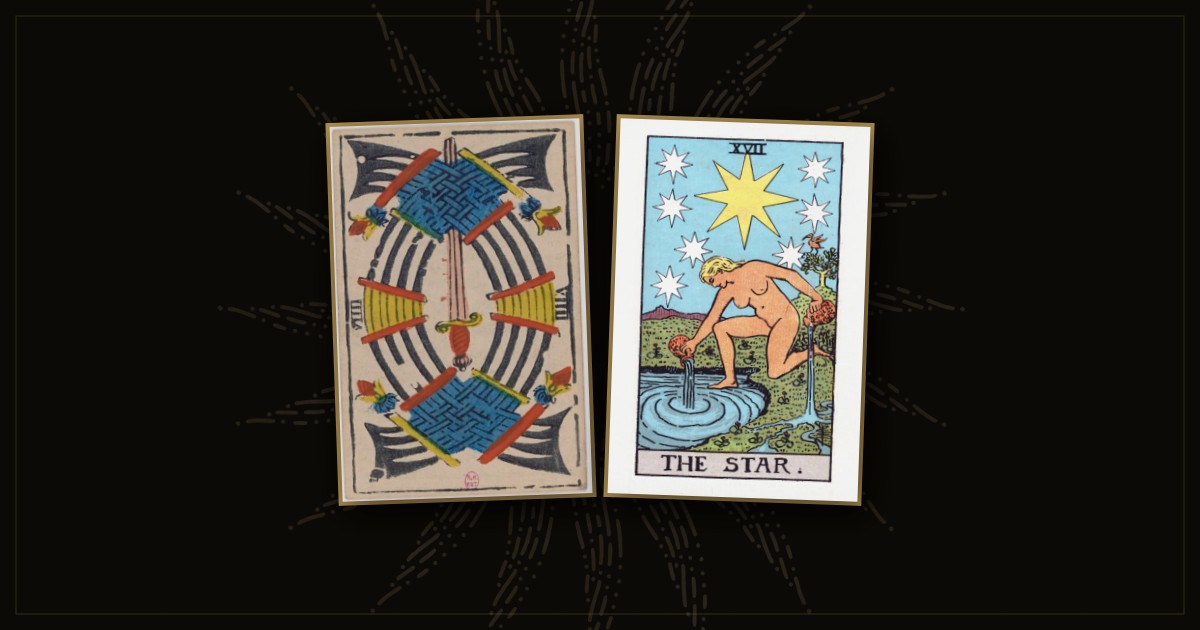
When Your Mind Will Not Quiet Down
Anxiety is a loop. The same thoughts circling, the same worries amplifying, the same what-ifs multiplying. Your mind races ahead to catastrophe while your body stays frozen in the present.
Tarot will not cure anxiety. It is not therapy and it is not medicine. But it can do something that anxious minds desperately need: give you a focal point outside your own thoughts.
When you draw a card, you break the loop. For a moment, your attention shifts from the spiral inside your head to an image in front of you. That interruption, small as it seems, is powerful.
- Tarot is not a substitute for therapy or medication for anxiety. It functions as a complementary grounding tool that interrupts anxious loops by giving the mind a focal point outside its own thoughts.
- A three-card grounding spread moves anxiety from overwhelm to action. Card 1 names what is felt, Card 2 names the specific fear, and Card 3 offers one actionable next step rather than a complete solution.
- Six cards commonly surface during anxious periods. The Nine of Swords (anxiety itself), The Moon (illusion), Eight of Swords (feeling trapped), Four of Swords (rest), The Hermit (intentional withdrawal), and Temperance (balance and patience).
- Five cards typically signal relief in anxious readings. The Star, The Sun, Ace of Cups, Six of Swords, and Ten of Cups all point toward renewal, clarity, or emotional fulfillment.
- Repeatedly asking the same anxious question deepens the spiral rather than resolving it. Pulling again after a difficult card, projecting catastrophic thinking onto every draw, and replacing professional help with tarot are the three practices to avoid.
Why Tarot Helps Anxious Minds
Anxiety thrives on abstraction. Vague fears, unnamed worries, shapeless dread. Tarot works by making the abstract concrete. You cannot spiral about “everything” when you are looking at a specific image with specific symbols telling a specific story.
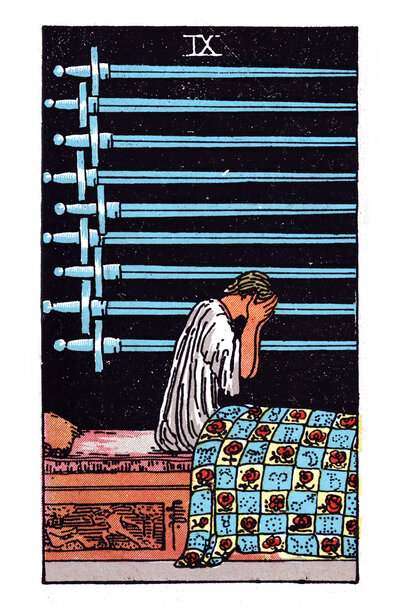
The cards externalize your inner state. Instead of “I feel terrible and I do not know why,” you draw The Nine of Swords and think: “Yes. That is exactly it. I am lying awake, tormented by thoughts that feel bigger than they are.”
Naming the feeling is the first step toward loosening its grip.
A Grounding Spread for Anxious Moments
When anxiety spikes, try this three-card pull:
Card 1: What I am feeling right now. This card mirrors your emotional state. It validates what is happening without judgment.
Card 2: What I am afraid of. This card names the specific fear underneath the anxiety. Often, just seeing it named on a card takes away some of its power.
Card 3: What I can do right now. This card offers one actionable step. Not a solution to everything. Just the next thing.
The power of this spread is that it moves you from overwhelm (Card 1) through clarity (Card 2) to action (Card 3). It is a path out of the loop.
Cards That Often Appear During Anxious Times
If these cards keep showing up in your readings, they are not adding to your anxiety. They are acknowledging it.
Nine of Swords — The card of anxiety itself. A figure sitting up in bed, head in hands, swords hanging above. This card says: “I see your worry. But look closely at the image. The swords are not touching you. The fear is real, but the danger may not be.”
The Moon — Illusion and confusion. Things feel scarier than they are because you cannot see clearly. This card asks you to wait for daylight before making decisions.
Eight of Swords — Feeling trapped and powerless. But notice: the bindings are loose. The path forward exists. You just cannot see it yet through the blindfold of anxiety.
Four of Swords — Rest. Your mind needs rest. This card is not telling you to push through. It is giving you permission to stop.
The Hermit — Withdraw, but intentionally. Solitude is not isolation when it is chosen. Sometimes the anxious mind needs quiet, not company.
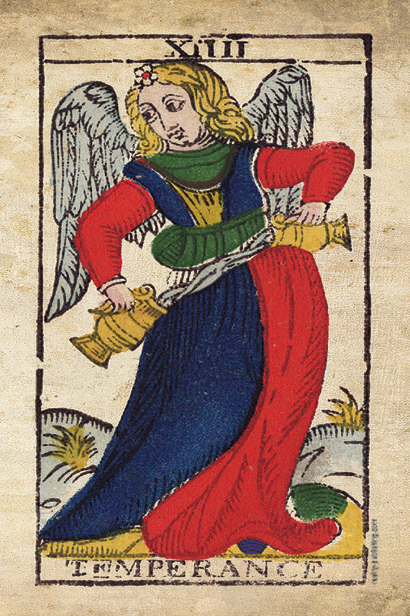
Temperance — Balance and patience. The antidote to anxiety’s urgency. Nothing needs to be decided right now.
Cards That Bring Relief
When these appear during anxious readings, breathe:
The Star — After the storm, there is renewal. Hope is not naive. It is necessary.
The Sun — Clarity, warmth, and joy. The fog lifts. Things are simpler than anxiety made them seem.
Ace of Cups — Emotional renewal. A fresh start for your heart.
Six of Swords — You are moving away from troubled waters. The transition is happening, even if it does not feel like it yet.
Ten of Cups — Emotional fulfillment and peace. A reminder of what you are working toward.

Daily Practice for Anxiety Management
The best tarot practice for anxiety is not the occasional deep reading. It is the daily check-in. Here is why:
Predictability reduces anxiety. A daily ritual gives your day structure. You know that every morning, you will sit down, draw a card, and spend two minutes reflecting. That consistency is grounding.
Small insights compound. One card per day does not feel like much. But after thirty days, you have thirty data points about your inner life. Patterns emerge. You start to see what triggers your anxiety and what soothes it.
It builds your trust muscle. Anxiety is, at its core, a lack of trust: in yourself, in the future, in your ability to handle what comes. Each time you draw a card and sit with its message, you practice trusting something outside your anxious thoughts.
What Not to Do
Do not ask the same anxious question over and over. If you ask “Will everything be okay?” and draw a difficult card, pulling again will not help. It will deepen the spiral.
Do not use tarot to feed catastrophic thinking. If every card you draw confirms your worst fear, you are projecting, not reading. Step away. Come back tomorrow.
Do not replace professional help with tarot. If anxiety is interfering with your daily life, tarot is a complement to therapy, not a substitute for it.
The Cards Meet You Where You Are
Tarot does not ask you to be calm before you start. It meets you in the anxiety, sits with you in it, and gently points toward what might help.
The Cards Know was built for this kind of practice. A daily reading that checks in with you, that learns your patterns, and that offers something personal and grounding. Not a fix. A practice. One card at a time.