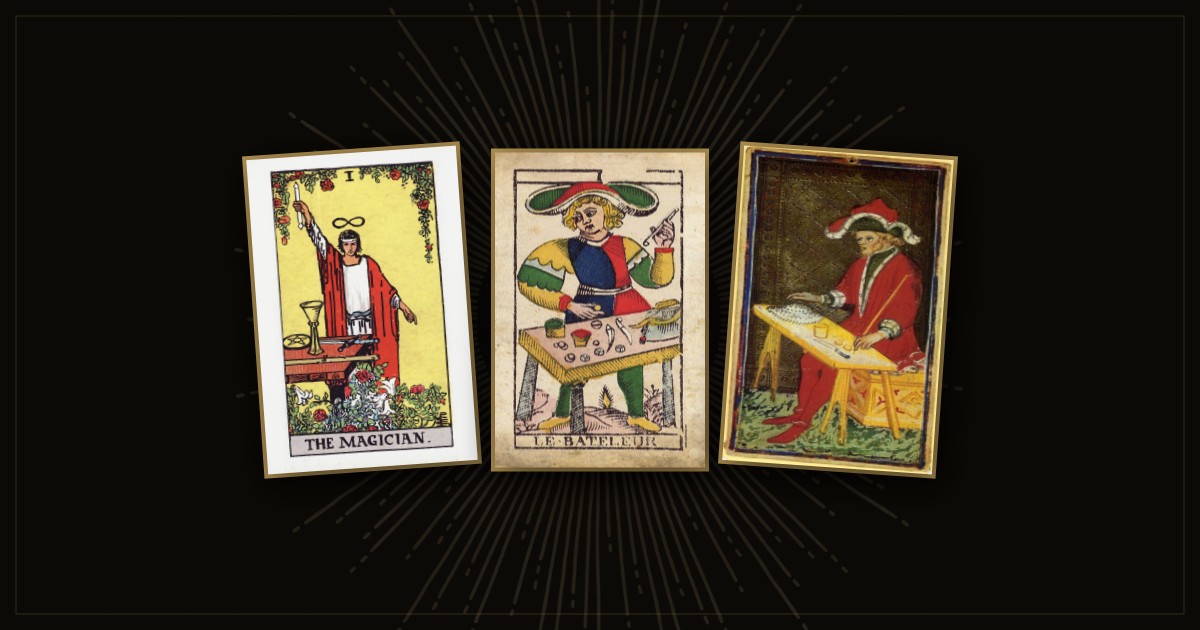
There Are Thousands of Decks. Start Here.
Walk into any metaphysical shop or browse any online store and you will find hundreds of tarot decks. Modern minimalist decks, richly illustrated fantasy decks, decks featuring cats, decks with abstract art, decks inspired by every culture and mythology imaginable.
It is overwhelming. And the question every beginner asks is the same: which one should I get?
The honest answer: the one you are drawn to. But that is not very helpful when you are staring at a wall of options. So let us narrow it down.
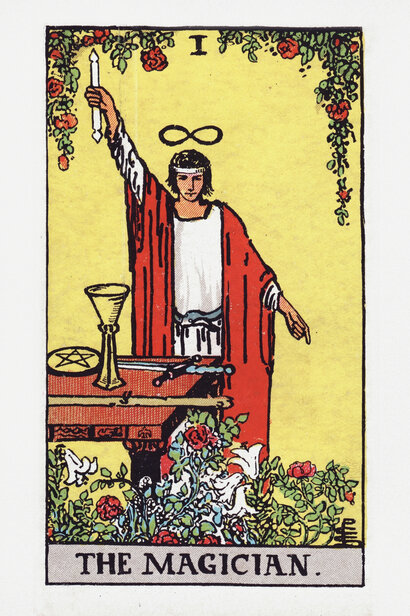
- The Rider-Waite-Smith deck, published in 1909, is the universal beginner starting point. Illustrated by Pamela Colman Smith, every one of its 78 cards has a full scene, and most tarot books and websites describe cards based on its imagery.
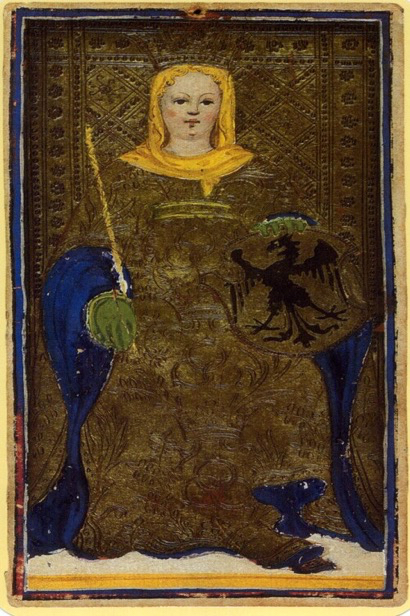
- The Tarot de Marseille dates to the 15th century and uses pip cards for the Minor Arcana. Its geometric arrangements of suit symbols (rather than illustrated scenes) reward intuition and pattern recognition but make it harder for beginners.
- A standard tarot deck has 78 cards in a fixed structure. 22 Major Arcana plus 56 Minor Arcana split into four suits, and oracle decks marketed alongside tarot often follow different systems entirely.
- Mass-produced decks cost roughly $15-$30 while indie decks cost $30-$60. The standard Rider-Waite-Smith is available for under fifteen dollars and remains arguably the best learning deck ever made.
- The myth that a first deck must be gifted has no historical basis. Beginners should buy their own deck, start with one, and resist collecting for at least six months while learning a single deck deeply.
The Rider-Waite-Smith: The Universal Starting Point
If you buy one deck and only one deck, make it the Rider-Waite-Smith (RWS). Published in 1909, illustrated by Pamela Colman Smith, this is the deck that most tarot education is based on.
Why it matters for beginners:
- Every card has a full illustration. Unlike older decks where the Minor Arcana just shows a number of objects (five swords, three cups), the RWS gives each card a scene with characters, emotions, and a story. This makes intuitive reading much easier.
- Every guidebook references it. When you read about The Tower in any tarot book or website, the description matches the RWS imagery. Learning with this deck means every resource is compatible.
- The symbolism is rich but accessible. Pamela Colman Smith embedded layers of meaning into every image. You will discover new details years into your practice.
The imagery is over a century old, so the art style is specific. If it does not resonate visually, there are modern redraws that keep the same symbolism with updated art.

The Marseille Tarot: For Purists and Minimalists
The Tarot de Marseille is older than the RWS, dating back to the 15th century. Its Major Arcana have bold, iconic imagery. Its Minor Arcana are pip cards: geometric arrangements of the suit symbol without illustrated scenes.
This deck is better for readers who:
- Want to develop pure intuition without illustrated “hints”
- Appreciate historical and traditional aesthetics
- Are drawn to pattern recognition over narrative reading
It is a harder starting point because the pip cards require more imagination, but many experienced readers consider it the most rewarding deck to master.
Modern and Indie Decks
The last decade has seen an explosion of independently published tarot decks. Some follow the RWS structure closely with new art styles. Others reimagine the system entirely.
Good modern beginner options:
- The Modern Witch Tarot — RWS symbolism redrawn with contemporary, diverse characters. Familiar scenes in a modern setting.
- The Wild Unknown — Minimalist, animal-themed imagery. Beautiful and intuitive, though it diverges from traditional symbolism.
- Light Seer’s Tarot — Soft, dreamy art with clear emotional storytelling. Very popular with beginners who want something gentler than the RWS.
When choosing a modern deck, check whether it follows the standard 78-card structure (22 Major Arcana + 56 Minor Arcana in four suits). Some “oracle decks” are marketed alongside tarot but follow different systems entirely.
What to Look For in Your First Deck
Full Scenes on Every Card
For your first deck, choose one where all 78 cards have illustrated scenes. This makes reading dramatically easier. You can look at the image and tell a story, even without memorizing any meanings.
A Guidebook You Can Follow
Most decks come with a small booklet. Some are detailed. Some are barely a pamphlet. For beginners, a more thorough guidebook helps. You can always supplement with online resources, but having something in hand that matches your specific deck is valuable.
Art That You Connect With
This sounds vague, but it matters more than anything else. You will be looking at these images daily. If the art does not speak to you, you will not want to use the deck. Trust your aesthetic response.
Standard Structure
Stick with a standard 78-card deck for your first purchase. 22 Major Arcana, 56 Minor Arcana, four suits. This ensures compatibility with any spread, guidebook, or learning resource.
Common Questions
Do I need to be gifted my first deck?
No. This is a persistent myth with no historical basis. Buy your own deck. Choose the one you want.
How much should I spend?
Mass-produced decks typically cost between fifteen and thirty dollars. Indie and artist decks range from thirty to sixty. You do not need an expensive deck to start. The standard RWS is available for under fifteen dollars and is arguably the best learning deck ever made.
Should I buy online or in person?
In person is better if you can. You can hold the deck, feel the card stock, and see the art at actual size. Many metaphysical shops have sample decks you can browse.
Online is fine too. Read reviews, look at full deck walkthroughs on YouTube, and check the card dimensions and stock quality.
How many decks do I need?
One. Start with one deck, learn it deeply, and resist the urge to collect. Deck collecting is a separate hobby from tarot reading. For your first six months, one deck is enough.
After that, if you feel drawn to a second deck, go for it. Many readers eventually settle on two or three favorites.
Your First Deck Is Not Your Last Deck
Do not overthink this decision. Your first deck is the deck you learn with, not the deck you are married to. Many experienced readers look back on their first deck with fondness, but it is rarely the one they use most.
Pick one. Buy it. Start pulling cards. The deck teaches you as much as you teach yourself.
And when you are ready to start your daily practice, The Cards Know is here. The app works with any deck. Draw your card, read with your own deck in your hands, and let the app deepen the experience with personalized readings and reflection prompts.